
When Walls Breathe: The Ancient Practice of Growing Moss on Everything
Moss is 450 million years old and it already knows how to live on concrete. Here's the science, the history, and how to start your own living wall this weekend with a blender and some yogurt.
Disclosure: Some links in this article are affiliate links. If you purchase through them, we may earn a small commission at no extra cost to you. We only recommend resources we genuinely believe in.
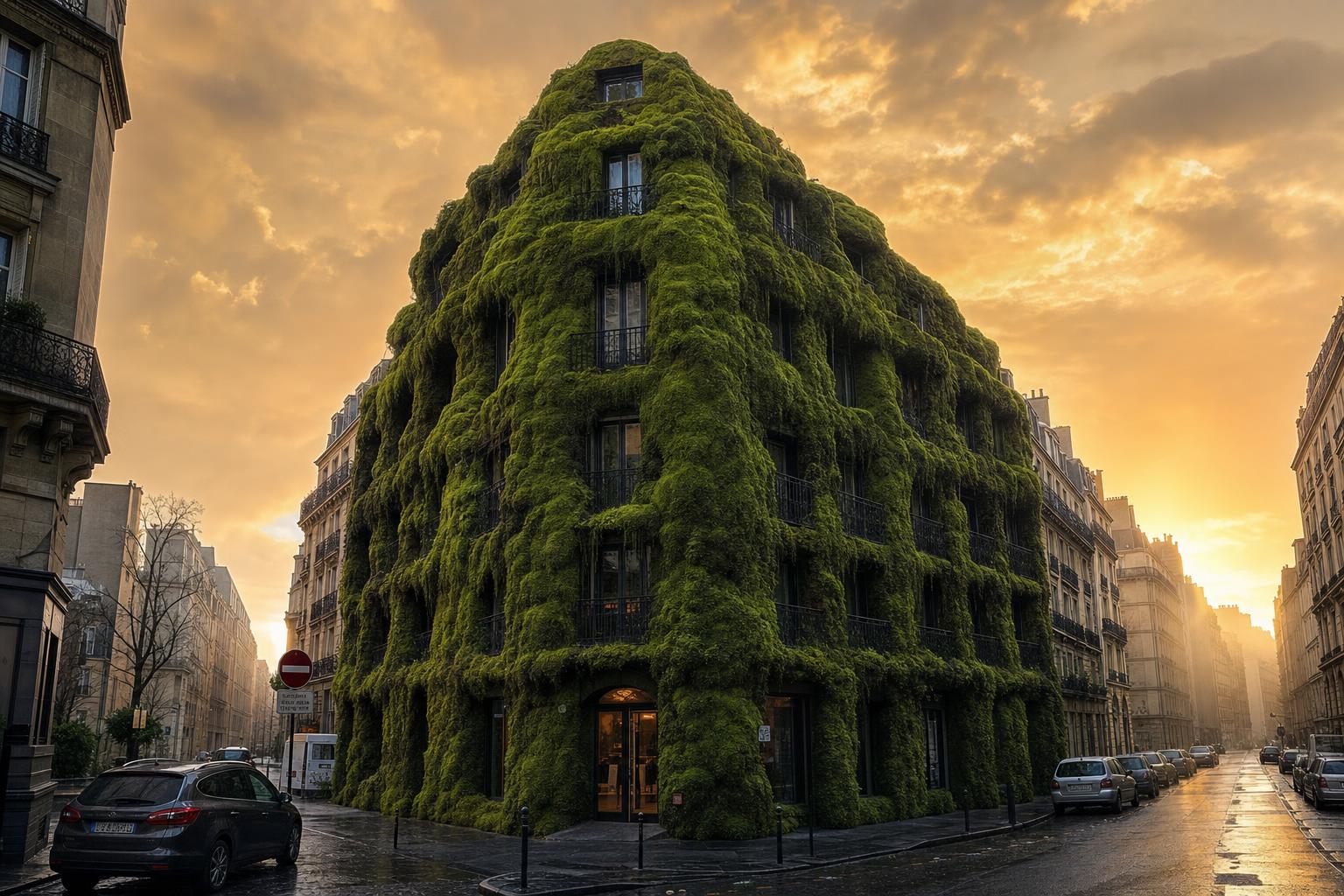
There's a building in Amsterdam where the walls are alive.
Not decoratively alive. Not faux-green-panel alive. Literally, biologically alive — covered from street level to roofline in living moss that breathes, filters air, absorbs rain, and cools the surrounding temperature without a single pipe, pump, or maintenance crew.
I came across this a few weeks ago through a short video. The person filming it didn't say much. They didn't need to. The image was enough: grey city, grey street, grey buildings — and then one building standing there draped in the deepest, most luminous green I'd seen outside of a forest.
Something stirred. Because I've thought about this for years. The idea that buildings could be alive. That cities could breathe. Not as futurist fantasy, but as a return to something older and wiser than concrete.
Moss has been doing this for 450 million years. We're only just remembering how to let it.
The Oldest Plant on Earth Wants to Live on Your Wall
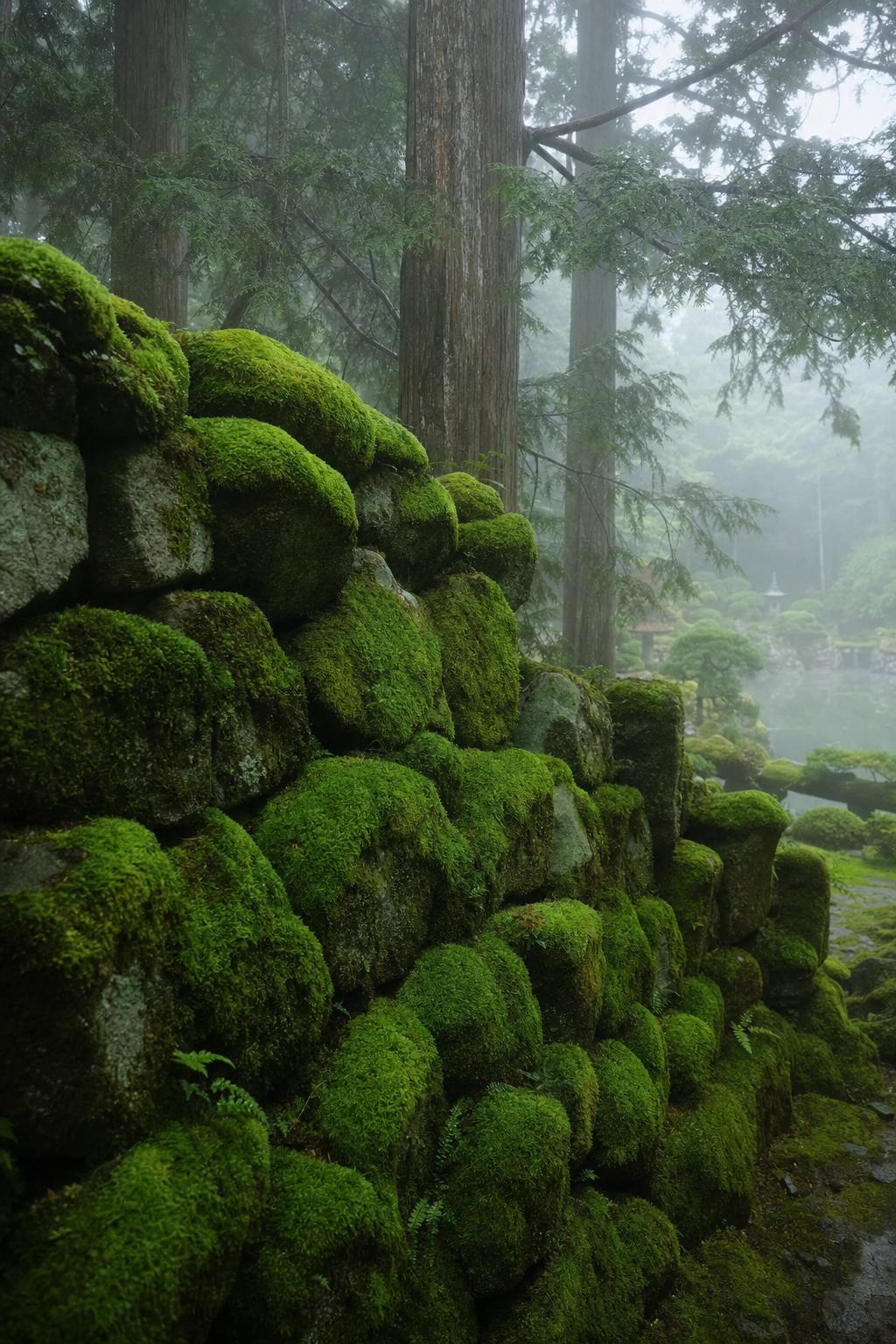
Before there were trees, before there were flowering plants, before there were insects or amphibians or anything that would recognize as complex life — there was moss.
It appeared on land approximately 450 million years ago. It was the first plant to leave the water and colonize bare rock. It built the conditions — the thin soil, the moisture retention, the slow chemical breakdown of stone — that made every other land-based ecosystem possible. Everything that grows on this planet grows on a foundation that moss laid down first.
And it never stopped. It is on every continent. It grows in the Arctic and on tropical equatorial rock faces. It survives complete desiccation and rehydrates fully when water returns. Some species are essentially immortal — dormant for decades, alive again at the first rain.
The Japanese understood this and built entire philosophies around it. During the Heian period (794–1185 CE), garden masters cultivated moss on stone walls and pathways with the same deliberateness they brought to everything else. In Shintoism, moss represents the sacred life force — the visible expression of harmony between the human-built and the natural. The oldest moss gardens in Japan have been tended continuously for over a thousand years. They don't look designed. They look inevitable. Like the moss was always going to be there.
Celtic traditions linked moss to nature's healing wisdom. Scandinavian folklore wove it into the fabric of the living forest, the home of hidden worlds. Indigenous communities across North America used it as medicine, insulation, and a signal of water underground.
Robin Wall Kimmerer — botanist, Indigenous scholar, author of Braiding Sweetgrass — spent her career studying mosses. Her conclusion: moss is our greatest teacher of resilience. It arrived with nothing. No roots, no soil, no established ecosystem. It made the world hospitable for everything that came after. Then it kept going.
Why Every Modern Wall Is Biologically Dead
Standard concrete is hostile to life.
Its pH runs between 12 and 13 — roughly as alkaline as household bleach. In that environment, moss spores die before they can establish. Bacteria can't hold on. Fungi have no foothold. The surface remains sterile, inert, permanently grey.
This wasn't an accident. For most of modern architectural history, biological growth on concrete was treated as a problem — as damage, as decay, as evidence of poor maintenance. Power-washers came out. Biocides were applied. The wall was kept clean.
We built our cities to repel life. And then we wondered why they felt dead.
A team of researchers at Delft University of Technology in the Netherlands spent years asking what would happen if you did the opposite — if you engineered concrete specifically to invite biological colonization rather than kill it.
The result was bioreceptive concrete: a material with carefully calibrated porosity, lower alkalinity, and a surface structure that moss spores can anchor into and grow from. Not just tolerate. Actually thrive on.
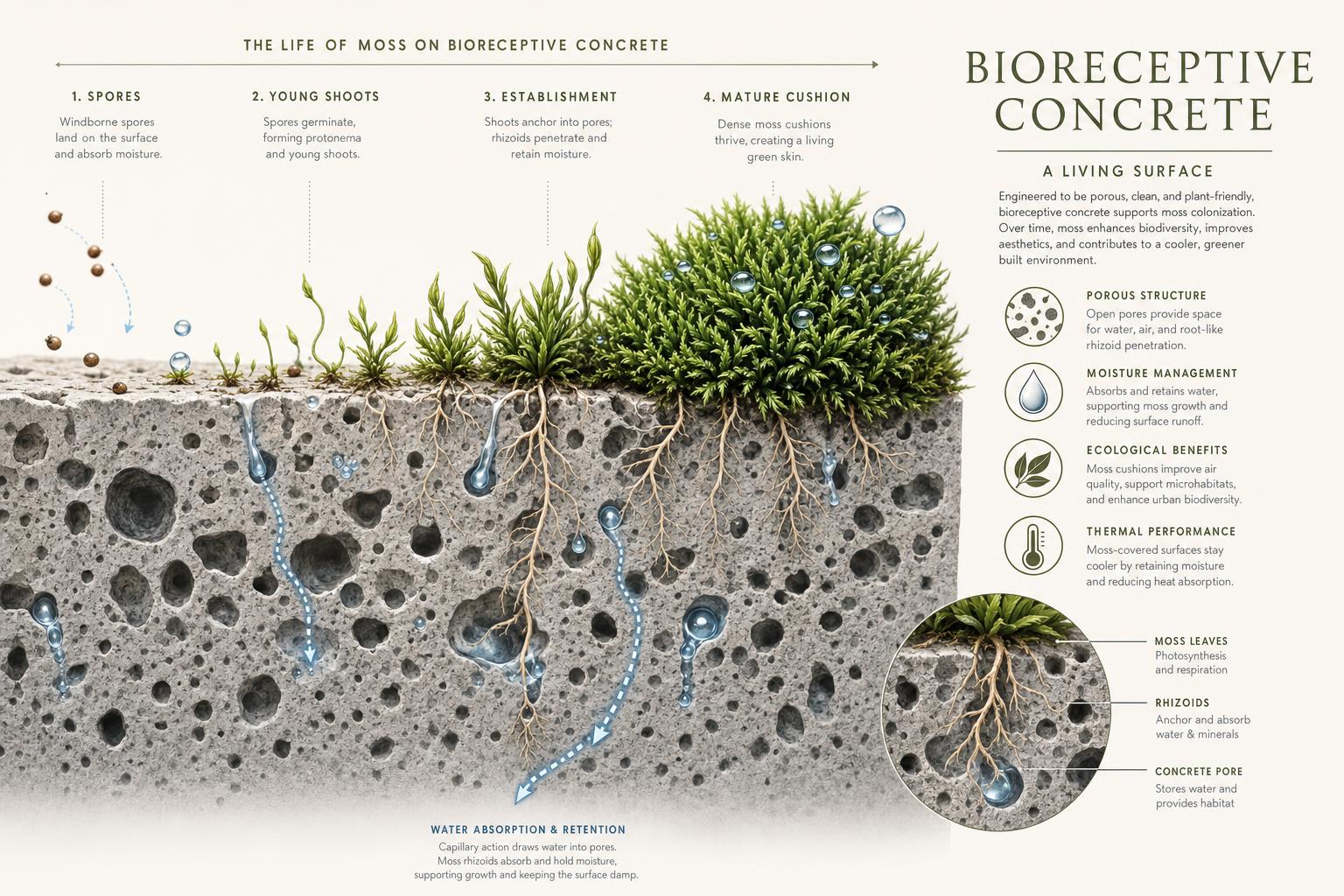
The startup that came out of that research is called Respyre — gorespyre.com. Their bioreceptive panels are made from recycled concrete aggregates. The rubble of demolished buildings, ground up and reformulated as a surface that invites life back in.
That is a complete philosophical reversal in one product.
How It Actually Works
The process Respyre uses has a rhythm to it — and that rhythm matters.
First, moss is grown indoors. Six weeks under low light, watered daily. Not to rush it, but to let the moss develop the structural root-like threads (rhizoids) it needs to anchor firmly into the bioreceptive surface.
Then the panels move outside — but shielded from direct UV for the first three months while the moss adapts to the harsher outdoor environment. UV is brutal for newly transplanted moss. You ease it in.
After roughly twelve weeks outdoors, the moss is established. And then — this is the part that still feels almost impossible to me — it becomes self-sustaining. It absorbs moisture from rain and atmospheric humidity. It doesn't need irrigation. No pipes. No scheduled maintenance. The wall just lives.
The best species for this? Tortula muralis — a moss that can completely desiccate in drought and rehydrate fully when moisture returns. The researchers call it a resurrection plant. A wall covered in Tortula muralis can go through a dry California summer, look dead, and come back to life the moment October rain arrives.
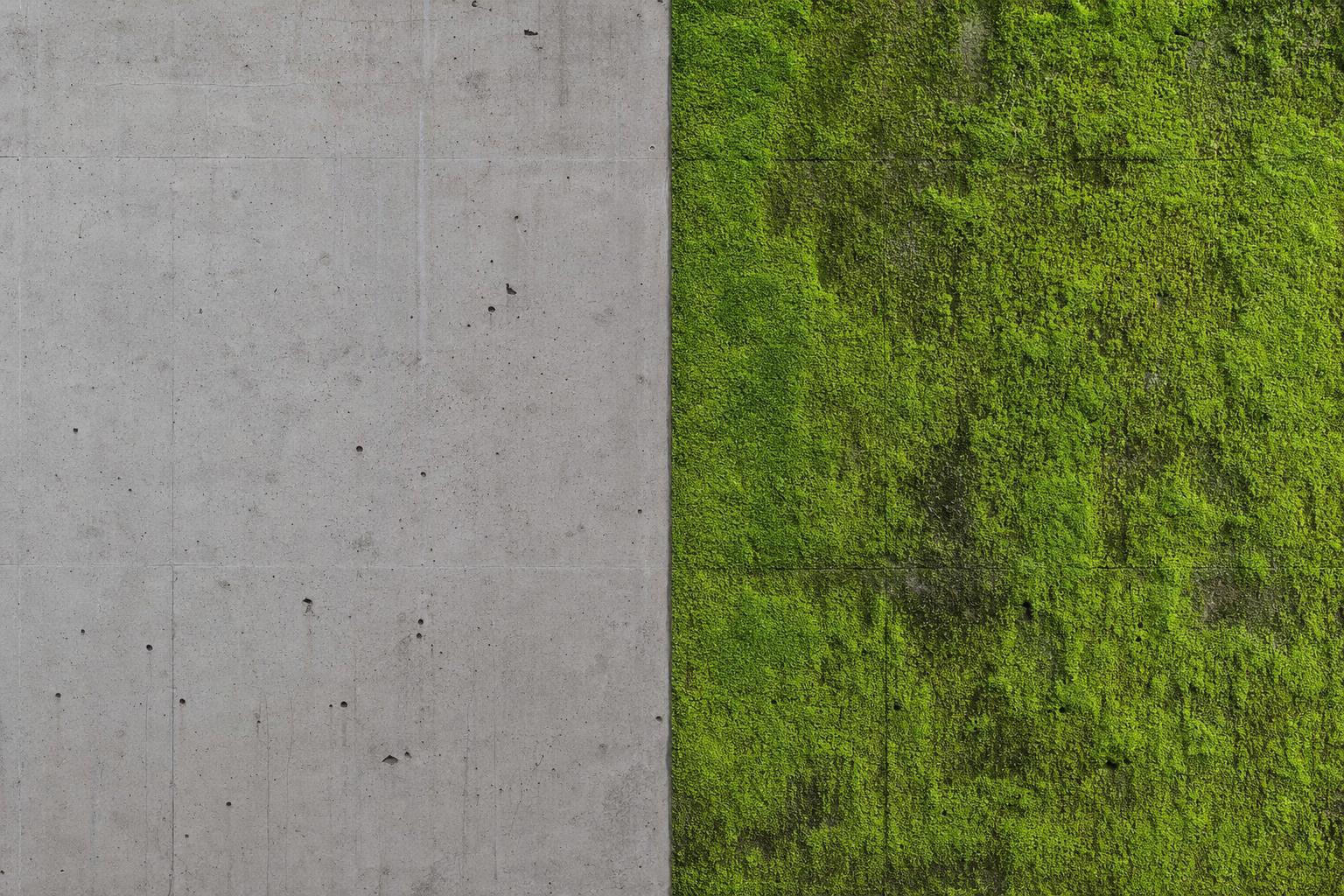
Pilot projects in Amsterdam and Eindhoven — including applications on social housing buildings — showed measurable results: surface temperature reductions, improved local air quality, and spontaneous colonization of surrounding concrete as the moss spread beyond the treated panels on its own.
The technology works. The question now is scale.
What a Living Wall Actually Does
People assume moss walls are aesthetic. They are — dramatically so. But the ecosystem services these surfaces provide are the more important story.
Air. Moss doesn't breathe through roots. It absorbs everything — nutrients, pollutants, water — directly through its leaves. This makes it one of the most effective living air filters we know of. Fine particulate matter (PM2.5), the microscopic particles linked to respiratory disease and heart conditions, is captured in the moss surface in ways that bare concrete or traditional planted walls can't match.
Temperature. Cities run 3 to 8°C hotter than surrounding areas because of concrete and asphalt. Moss-covered surfaces release moisture through a process called evapotranspiration — essentially sweating — that actively cools the surrounding air. Not by a little. Meaningfully. In Los Angeles, where summer heat is intensifying every year, this matters in a visceral, public health way.
Sound. A 2025 study in Building and Environment tested six moss species on bioreceptive concrete for noise reduction. The results: moss meaningfully absorbs urban noise, especially in the frequency ranges above 1000Hz — where traffic, construction, and human voices sit. City streets with moss-covered buildings are measurably quieter.
Water. Moss is a sponge. A mature moss wall absorbs rainwater and releases it slowly, reducing the stormwater runoff that overwhelms urban drainage systems and carries pollutants into waterways.
Biodiversity. Moss is a habitat. Insects, invertebrates, microorganisms, birds — an entire food web establishes itself in a mature moss surface. Scale this across a neighborhood and you've built a wildlife corridor through what was previously dead infrastructure.
Your nervous system. Decades of biophilic research confirm what every person already knows in their body: being near living plants measurably reduces cortisol, lowers blood pressure, and improves focus and mood. A moss wall is not just a material intervention. It is medicine for the people who live near it.
The Real Costs — Honest Numbers
One of the most common questions is: what does this actually cost?
Traditional living walls — the kind with plants in soil pockets, irrigation systems, and drainage infrastructure — run $175 to $250 per square foot installed. That's before ongoing maintenance fees. They're beautiful and effective, but they require engineering, plumbing, and a maintenance contract. Most residential homeowners are not building these.
Preserved moss art panels (indoor, decorative) run $100 to $300 per square foot. No maintenance required, no living plants, no air purification. They look like moss. They don't act like it.
Bioreceptive concrete systems like Respyre are positioned as significantly cheaper than traditional living walls — no irrigation infrastructure is the main cost driver. Exact residential pricing isn't public yet as they scale, but the principle is clear: remove the plumbing, remove most of the cost.
And then there's the version that costs almost nothing.
The $0 Method: Moss Paint
This is what people have been doing in gardens and on stone walls and brick pathways for as long as anyone can remember. Reddit's r/landscaping discovered it independently. Japanese garden masters have been doing a version of it for centuries. It works.
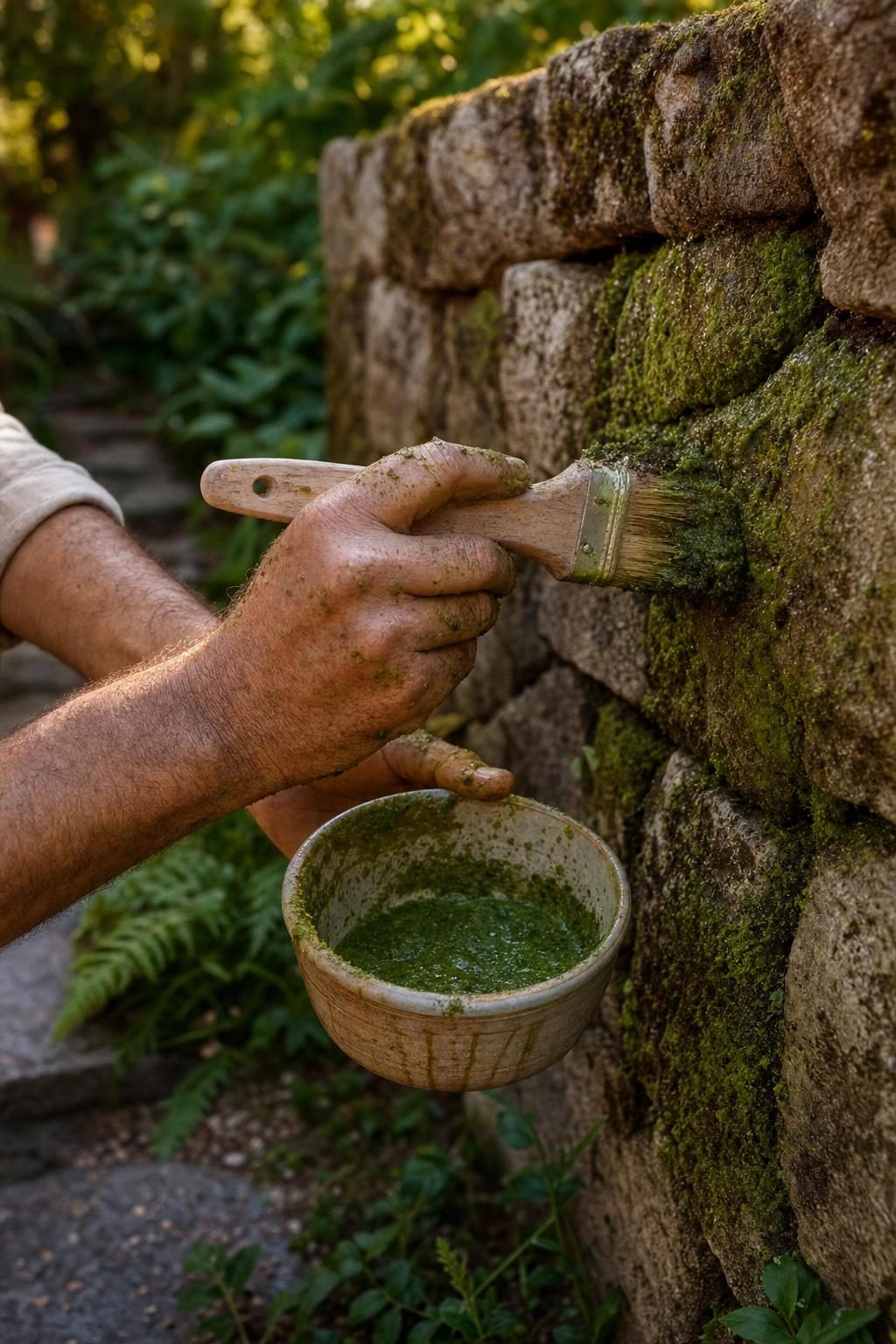
The recipe:
Collect a handful of moss from your garden, a park, anywhere shaded and damp. Don't worry about which species — local moss is already adapted to your climate.
Blend it with half a cup of buttermilk or plain yogurt and half a cup of water. Blend until you have a thick greenish slurry. Add a tablespoon of sugar if you want to accelerate the growth. The buttermilk acidifies the surface slightly — exactly what moss prefers.
Clean your target surface and dampen it well. Rainwater is better than tap water; chlorine is slightly hostile to moss. Then paint the slurry on with a brush. Go thick. Uneven is fine. Moss will find its own edges.
Keep the surface moist for the first two to four weeks — mist it daily, or let rain do the work. Shade is better than direct sun for establishment.
First growth appears in two to six weeks. Coverage by three months. Self-sustaining after that.
Best surfaces: weathered brick, rough stone, old concrete (alkalinity drops with age — the older the concrete, the better), terracotta pots, stepping stones, garden retaining walls.
Avoid: metal, very smooth polished concrete, freshly poured concrete.
One observation from the communities that have been doing this: once you have one patch going, you can peel off a small section and press it against an adjacent surface. It spreads from there on its own. You become less the gardener and more the facilitator.
Your Backyard Is the Right Scale
I want to be clear about something: you do not need a city government or an architecture firm to start doing this.
Your garden wall is the right scale. The stone retaining wall at the back of your yard. The brick path. The terracotta planters you've had for three years. The old concrete raised bed.
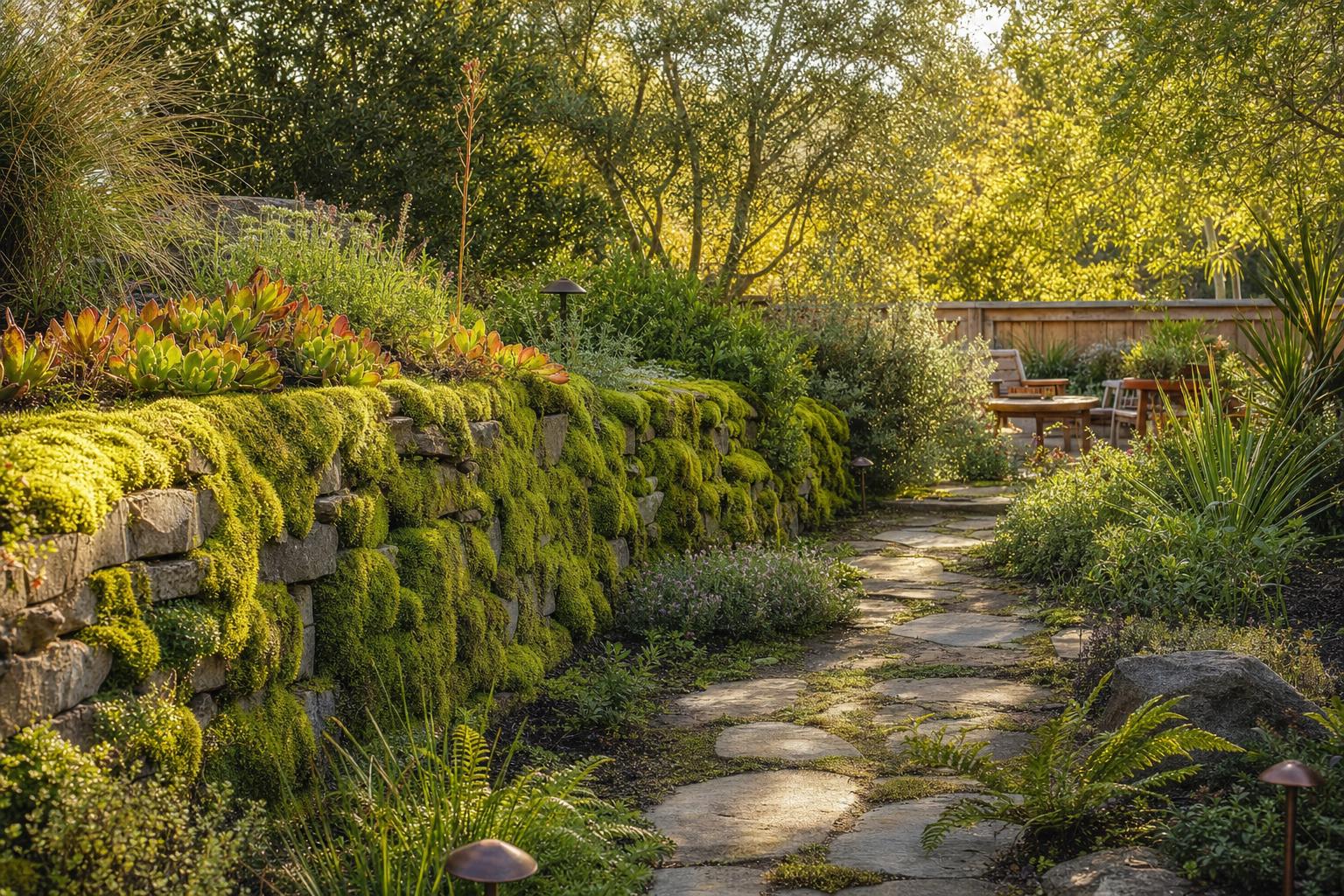
Regenerative design at the homestead level isn't about grand gestures. It's about a series of small decisions that compound over time. Stop using biocides. Stop power-washing biological growth off your stone walls. Let the lichen stay. Encourage the moss to come back.
Then actively invite it. Paint a wall. Watch it take hold. Notice the temperature around it in summer. Notice the insects that arrive. Notice how you feel walking past it every morning compared to how you felt walking past bare concrete.
This is the shift. From a property that defends itself against nature, to one that works with it. From a house that resists biology to a home that participates in the local ecosystem.
It doesn't start with a renovation. It starts with a blender.
What This Points Toward
Researchers at TU Delft, MIT, and ETH Zurich have all confirmed: engineered bioreceptive surfaces work. The barriers to scale aren't scientific anymore. They're regulatory — building codes, contractor certification, insurance frameworks are still catching up.
But that gap is closing. The 2025–2028 period has been identified as the critical window when pilot projects will establish the standards, the data sets, and the case studies that mainstream adoption follows.
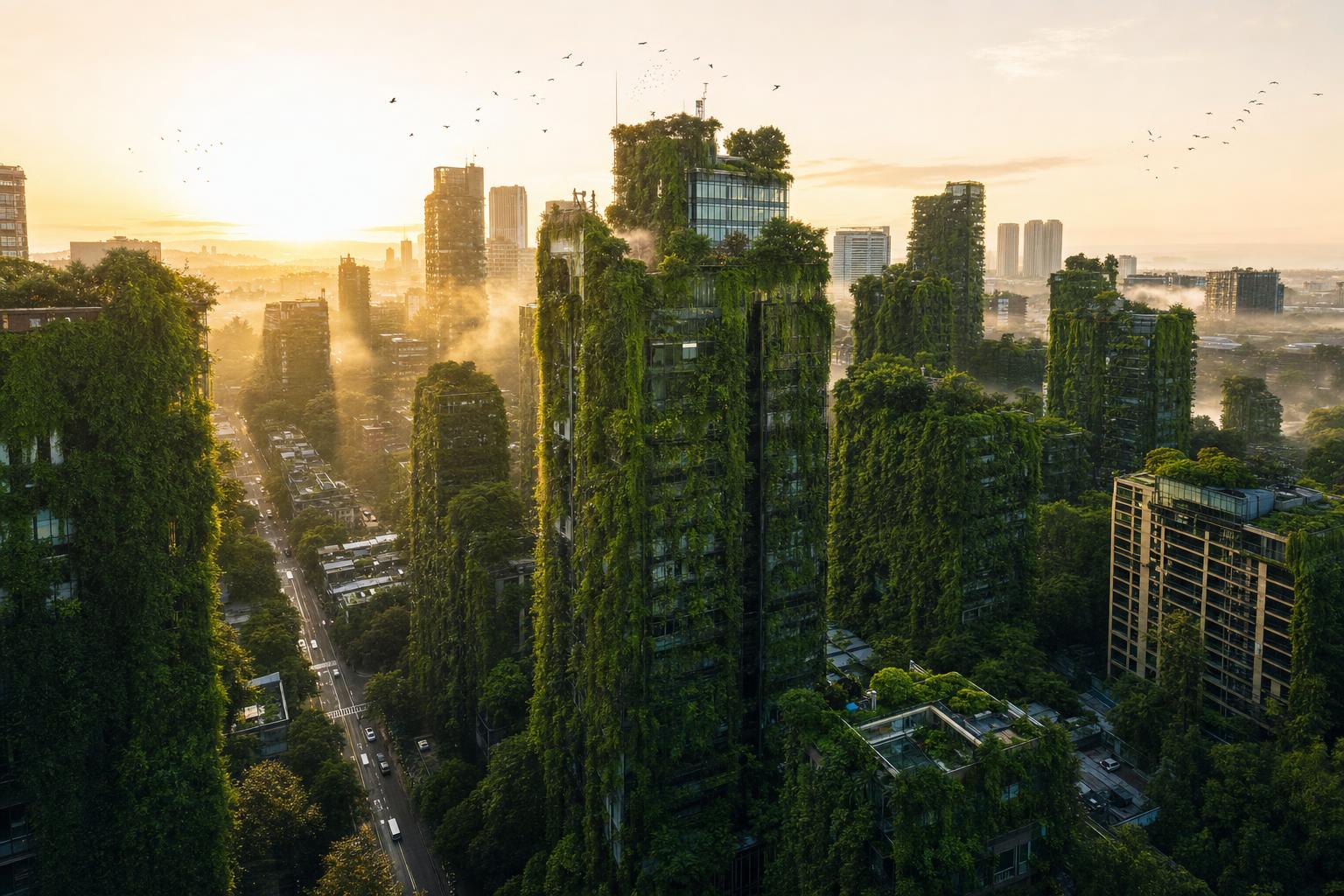
The deeper shift is philosophical, though. For a long time, we designed buildings to be permanent — unchanging, impervious, the same grey face on day one as on day five hundred. Biological growth was treated as failure.
Bioreceptive design says something completely different: what if a building that gets more alive with age is exactly what we should be building?
A building that improves as it ages. That gives back more to its surroundings over time than it takes. That becomes part of the ecological fabric of the neighborhood rather than a sealed interruption of it.
This is what I mean when I talk about regenerative design. Not a style. Not a trend. A philosophy of relationship between the built and the living. One that the oldest plants on Earth have been demonstrating for 450 million years, patient as stone, waiting for us to remember.
Start This Weekend
You don't need to wait for building codes to catch up.
Find some moss. Mix it with yogurt. Paint it on something rough and shaded. Keep it moist for a few weeks.
Watch what happens.
Then tell me you don't feel something shift when you look at a wall that's starting to breathe.
Explore the full Edenverse Codex for more on regenerative design, living systems, and how to transform your backyard into a working ecosystem. Have you tried growing moss on your garden walls? Share your experience in the comments — we feature reader results every month.
Recommended Resource
The Self-Sufficient Backyard System
Paul Wheaton and Shawn Klassen-Koop's complete guide to creating abundance from your own land — soil, food systems, water harvesting, and regenerative design for any yard size.
Learn More →Download the Eden Backyard Starter Kit
Everything you need to transform your backyard into a productive system — free.
- Complete garden layout plans
- Seasonal planting schedules
- Soil preparation guides
- Water-saving techniques
- Natural pest control methods
Free — no credit card required